Table of Contents
▼Website Maintenance Plans for Small Businesses: What They Include & What They Cost per Month in 2026
- Nov 10, 2026
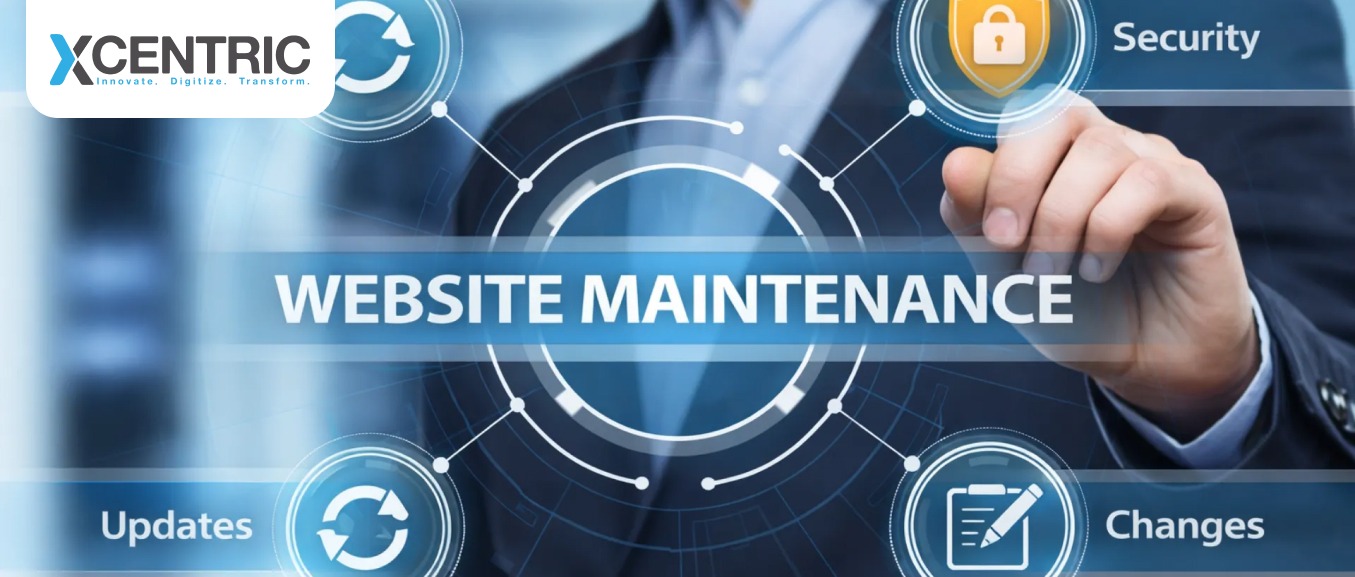
Your business website is an investment and, like any investment, requires ongoing upkeep to maximize returns and maintain value. Factors influencing website maintenance costs for small businesses in 2026 include the platform, the level of customization, complexity, and security. Basic informational websites require less upkeep than an e-commerce website or a custom web application.
Comparing maintenance quotes for websites isn't always easy, as some providers include different services in their quotes. For example, some providers include site backups and updates as well as performance and security monitoring, while others include content changes and support. Understanding these differences helps businesses choose a maintenance plan that protects their investment.
How Much Does Website Maintenance Cost for a Small Business?
Generally, website maintenance costs for small businesses fall within a particular range, with sites needing more customization and complexity commanding a higher maintenance cost. GoDaddy’s April 2026 pricing guide provides small business website pricing, with e-commerce sites requiring a higher range. The following table provides an approximation of the website service tiers provided in the guide.
Website Maintenance Plans and Estimated Monthly Costs
Plan tier | Estimated monthly cost | Typical website | What is included |
Basic | $50-$150 | Small business website, portfolio or informational WordPress site | Software updates, backups, basic security checks, uptime monitoring, basic troubleshooting |
Standard | $150-$500 | Service or lead-gen site, site with active or changing content | Basic maintenance, security and content edits, speed and form checks, reporting, priority assistance |
Advanced | $300-$1,000 | WooCommerce or similar site | Store maintenance, checkout/payments testing, product/site support, performance tuning, priority troubleshooting |
Basic and Standard figures are editorial planning bands within published SMB range; not separately reported national averages. Advanced figure is within published ecommerce range. These are market estimates, not Xcentric’s confirmed rates.
The actual price of website maintenance is a function of responsibility assigned, work included, and the current state of the website. A business should evaluate deliverables and not select a provider based on the lowest quoted price.
Xcentric offers an alternative. For businesses looking for a tailored maintenance arrangement, Xcentric’s Website Support & Maintenance Service is a good option.
What Should Website Maintenance Plans Include?
A good maintenance plan covers software updates, backups, security, performance, and functionality. More extensive plans should include assistance with content, reporting, and an urgent issue escalation path.
The following checklist outlines different levels of maintenance responsibility.
Tier 1 Maintenance may perform testing of updates to determine functionality but will not correct the issue if the site is malfunctioning. Tier 1 Maintenance will alert the appropriate person of any issues in the system.
Tier 2 Maintenance will perform testing to ensure updates to the site function as expected. They will also make corrections to the site if needed to restore functionality. If an automated upgrade caused an issue with a site’s functionality, Tier 2 Maintenance may take responsibility for restoring site function.
Tier 3 Maintenance will take responsibility for restoring site function and take corrective action. This may include resolving coding issues.
Website Maintenance Tasks and Service Levels
Maintenance tasks | Recommended frequency | Basic | Standard | Advanced |
Software and plugin updates | Monthly, with security updates reviewed promptly | Included | Included, with compatibility checks | Included, with staging where appropriate |
Website backups | Weekly, or more frequent based on risk | Scheduled backups | More frequent backups, with restoration checks | Frequent backups, with restoration and recovery planning |
Uptime monitoring | Continuous | Basic alerts | Continuous monitoring and alerts | Continuous monitoring with priority response |
Security scanning | Monthly, or based on risk | Basic scanning | Regular scanning and review of issues | Enhanced scanning, with remediation |
SSL certificate renewal | Prior to expiration | Renewal check | Renewal management | Renewal management and verification |
Speed checks | Quarterly | Basic review | Review of website performance and optimization | Optimization and enhancement |
Content edits | As requested | Small edits | Agreed monthly edits | Larger edits |
Forms and checkout testing | Monthly, or after changes | Contact form testing | Form and lead-flow testing | Payment and order-flow testing |
Performance reports | Monthly or quarterly | Status update | Detailed maintenance report | Detailed performance report |
Emergency fixes | As requested | Best-effort support | Priority support under agreed terms | Escalation and response arrangement defined |
The frequency and scope in this table represent recommended service standards. They are not to be taken as a representation that all service providers automatically include them in their service levels. It is advised that businesses request written confirmation of each responsibility before signing the agreement.
Software and plugin updates
It is critical to ensure the software on a website is up to date. Outdated software can cause the website to malfunction and can be a security risk. WordPress suggests updating the software and backing up the website before doing the update, in the event something goes wrong and the update causes issues.
If a maintenance provider updates the software without ensuring compatibility, there can be a negative effect on the website’s functionality. This is of greater concern for websites which have custom integration.
Backups and security monitoring
It is important for a website to have a backup because there is always a risk of data loss, or the website can crash. Backups allow a copy of the website to be restored. A good maintenance agreement should cover how often a backup is conducted, the length of time the backups are kept, and who is responsible for restoring a backup if needed.
Good security monitoring should also address the controls and measures in place to protect the website from a security threat, and also consider components that can be outdated and create a security risk. It is important for a business to have some understanding of website security and how it affects the business, as a lack of knowledge and understanding can cause a security risk.
Performance and content management
It is important for a website to have functionality that allows it to perform its intended task. A website that has poor performance can potentially frustrate users and affect the business. It is important for a website to have regular performance checks and resolve performance-related issues.
Website Maintenance Fees: What Costs Sit Outside the Plan?
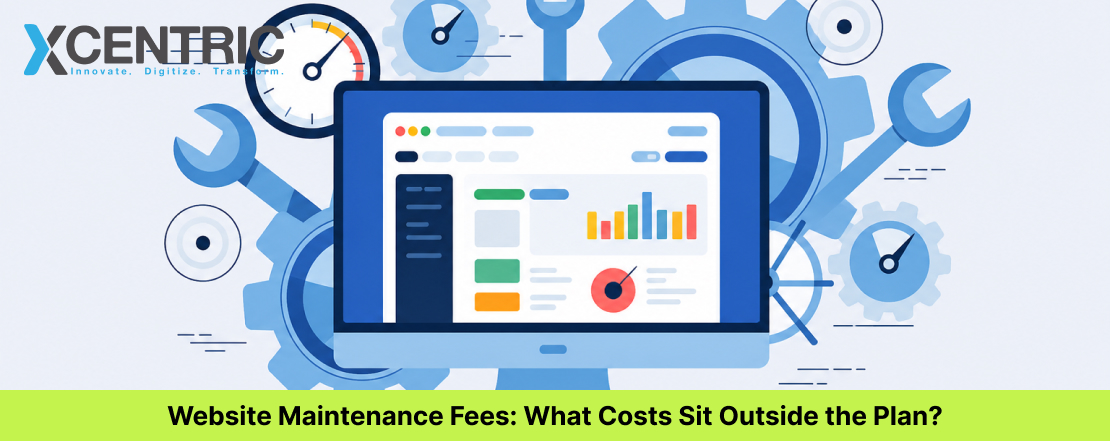
A website maintenance fee generally doesn’t include expenses for the site’s hosting, domain renewal, or custom development. Content also needs to be managed and updated. For example, if there are outdated services or products listed on a website, this can potentially reduce customer confidence.
Understanding these costs helps anticipate expenses and better determine the total cost of building a website, as well as the annual website maintenance budget.
Common Website Expenses Outside Maintenance Agreements
Cost element | What it covers | What to check |
Web Hosting | Server space and website availability | If hosting is managed and billed separately |
Domain Registration | Website address, ownership and renewal | If the domain is controlled elsewhere and if renewals are handled elsewhere |
Premium WordPress plugins | WordPress and third-party features and tools | If licences are renewed |
Shopify Apps | Features and integrations for Shopify store | If Apps are billed by Shopify |
SSL Certificates and security | Website security and tools | If security and certificates are billed elsewhere |
Website Redesign | Improving website layout, branding, navigation, user experience and accessibility | If redesign work is part of a separate project |
New features | Custom website features, integrations and modules | How development work is estimated and approved |
A maintenance retainer normally covers website upkeep and care. For example, correcting an existing contact form may be covered under the retainer while creating a new booking form may not.
How Much Does Monthly Website Maintenance Cost for WordPress, Shopify, and Custom Websites?
The cost of monthly website maintenance varies based on the type of website platform. For example, WordPress sites may require theme and plugin management, while Shopify stores may require management for apps and integrations. Custom-built sites may require management based on the architectural infrastructure of the site.
Website Platform Maintenance Responsibilities
Website Platform | Primary Responsibilities | Potential Issues | Appropriate Maintenance |
WordPress | Core, theme, and plugin updates | Plugin conflicts, malware | Managed maintenance |
Shopify | Theme management, app integrations and functionality | Theme conflicts, app integrations | Ecommerce support |
Custom Built | Integration, custom code | Software dependencies | Developer support |
WordPress Maintenance
WordPress websites are made up of a combination of core software, themes, and plugins. Each component may introduce security vulnerabilities. It is recommended by WordPress to update the website and create backups prior to upgrades. It is also recommended that businesses review plugin activity and remove unused plugins.
After plugin updates, it is recommended to test site functionality to ensure everything continues to operate correctly.
For businesses that use WordPress for lead generation, content publishing and/or customer enquiry management, professional website maintenance may help relieve the administrative burden of website maintenance.
Explore Xcentric’s WordPress website development service to learn more about WordPress development and website support.
Shopify Maintenance
For ecommerce, Shopify manages the infrastructure, but store owners still need to manage themes, applications and integrations. Shopify also provides an application for storefront checks.
Shopify's documentation states that theme updates may include bug fixes and security upgrades. Theme and app updates may impact storefront functionality and should be tested. Additionally, theme updates may require modifications to app code.
A Shopify maintenance plan should cover product presentation, site navigation, payment option availability, app functionality, and the checkout process.
Custom Web Site Maintenance
Custom-built websites often require a different approach to maintenance since the functionality is tied to the custom code and integrations.
Website owners may need maintenance to fix bugs, update servers and configuration, optimize API and database connectivity, and address security and performance concerns.
Xcentric offers website support and maintenance services for custom-built sites to resolve errors, update code for enhanced functionality and performance, and perform other support tasks.
Do Websites Need Monthly Maintenance?
Yes. Security and software updates and concerns require ongoing, frequent maintenance, as do backups. The needs of the business also change, and a predictable, scheduled time (i.e. monthly) provides an opportunity to catch issues before they negatively affect the business and/or website visitors.
Not every task needs to be done on the same schedule. Some issues may be of an emergent nature and require immediate remedy, while others may be scheduled for a later time.
Monthly maintenance tasks may include:
Assessing security and performance alerts
Checking backups and restore ability
Testing contact forms and important functions
Checking business availability, performance and content
Documenting work and issues
Transactional or customer data-centric websites, or sites that support core business activities, should be monitored more frequently.
Maintenance and redesigns are also different from one another. Maintenance is work done to keep features and functionality of a website in working order. Redesigns are broader projects that typically include changes to a company’s branding, structure, navigation and user experience. There are signs, however, that indicate the time is right to redesign your website.
Plan vs Pay-Per-Fix vs In-House: Which Option Fits Your Business Best?
A maintenance retainer is right for a company that needs a reliable, affordable source of support to keep its business running, while pay-per-fix is right for companies that do not require routine, ongoing support. In-house maintenance is suitable for a company that employs the necessary technical staff to support its website.
The choice is based on the critical nature of the website to the business and the consequences that may occur due to a website failure.
Scenario: A company with an informational website
A simple website for a law firm or consulting company may contain customer contact information, a secure online customer data collection form, a way to process customer enquiries, and secure, backed-up data.
A basic or standard maintenance plan can support the site and give peace of mind without paying for broad, costly ecommerce or development services.
Scenario: An online shop with thousands of SKUs
Product and inventory pages should be supported by working payment and order processing functionalities. A broken checkout page can result in lost sales.
An expanded maintenance arrangement is more appropriate as site failures can negatively impact the bottom line. Browser testing and expeditious response times should be prioritized.
Scenario: A custom web application
A business with a customer portal or booking system, or a business with a custom web app, may need more advanced support than a content management system (CMS) can provide. Things like database reliability and integrity, application integrations, code updates and changes, and security can be outside the skill set of most CMS providers.
For many of these businesses, a relationship with a development agency is more practical than hiring an independent contractor for each individual support ticket.
Xcentric Services may be a good choice for businesses that need support beyond website maintenance.
Website Maintenance Price: What to Watch Out for in an Agreement
A good website maintenance agreement defines the services provided, responds to the client in a timely manner, and documents expectations. Maintenance can be charged as a monthly or annual fee based on the service level agreement (SLA). Be very leery of agreements that state services are "unlimited."
Prior to signing an agreement, here are the things you should watch out for:
No service descriptions: No software or component updates are defined.
No backup policy: The provider has no described process for backing up website data, or has no defined process for restoring a website from a backup.
No process for reporting issues: There is no defined process for reporting an outage or website security emergency.
Charges for previously scoped work: The provider states that previously defined work would be charged at an hourly rate.
No records of work done: There are no case records of service completed.
Unclear ownership: The provider is the website host and/or domain name registrar.
Providing absolute guarantees: The provider promises the client will never have website security or availability issues.
A professional agreement should detail the scope of the work, exclusions, response arrangements, access permissions, reporting requirements, and cancellation terms.
Businesses should retain ownership of their core digital assets, including their domain names, website content, and critical digital accounts. A maintenance service should allow the customer to control and own its digital assets. The service should not make the customer overly dependent on the maintenance service for access to its digital assets.
Conclusion: Choose a Website Maintenance Plan that Supports Business Growth
Website maintenance is essential to address technical issues that may detrimentally impact the ability of customers to access a business’s website. An effective maintenance plan helps protect the website and its content and keeps key software applications and plugins updated.
When comparing website maintenance plans, businesses should evaluate the whole contract, not just the upfront price. Critical elements of a contract should include the level of service and support, responsiveness, and service quality, including emergency services, website backup and data recovery.
Xcentric supports and maintains WordPress and WooCommerce sites, online stores and other custom and eCommerce sites. It provides software and plugin updates, security monitoring, content updates, troubleshooting, and website performance improvements.
Whether you have a lead generation website, online store, or a custom web application, Xcentric can assess your needs and recommend the most appropriate support and maintenance arrangement.
Maintain your website and keep it secure and updated by contacting Xcentric Services. Xcentric will evaluate your needs and request, and provide a tailored maintenance proposal.
Frequently Asked Questions
How much should it cost to maintain a website?
Factors impacting website maintenance cost for small businesses include: the platform, website complexity, required security, and the level of support. When comparing service tiers or requesting a proposal, provide details on your actual website to get an accurate estimate, rather than relying on general quotes.
How much does it cost to maintain a website monthly, versus annually?
There are advantages to website maintenance either way. Monthly maintenance is easier to budget for because support expenses are spread over the year. For annual maintenance costs, consider the agreed service fee, add website hosting, domain and license costs, and project expenses.
Is a website maintenance plan worth it, compared with paying per fix?
This is dependent on the volume of required website updates and monitoring. For a website that requires very little maintenance, support on an as-needed basis may be more cost-effective.
What website maintenance fees include?
Website maintenance fees typically cover software updates, security checks, backups, and uptime and performance reviews. Depending on the agreement, they may cover edits, ecommerce testing, and support.
Is WordPress maintenance more expensive than Shopify maintenance?
Neither maintenance plan is automatically more expensive. WordPress requires attention to the core software, themes and plugins, while Shopify focuses more on apps, themes, store functionality and checkout processes. It's more important what customizations are required based on business needs rather than the name of the platform.
What should a small business not pay for in a maintenance plan?
A small business should not pay for premium software it doesn’t need, duplicate security services, unlimited maintenance services it will never use, or development work disguised as routine maintenance. Every charge should have a clear business justification and be explained in the contract.

Share



Want To Increase Your Ranking On The Search Engines?
Get In Touch With Us!
Trending Blogs
Digital Marketing...
Xcentric Team
8 MONTHS AGO


What To Read Next?

For owners and managers of dental clinics in Lahore, here is a critical fact you...
Xcentric Team
8 MONTHS AGO

The Middle East e-commerce industry is rapidly growing due to increased digital acceptance, mobile-first consumers...
Xcentric Team
9 MONTHS AGO

These days, the e-commerce industry is growing at an exponential rate. With the rise of...
Xcentric Team
9 MONTHS AGO