Table of Contents
▼
Building a small business isn't simply about getting a Facebook page and posting daily on Instagram. There is a need for a good source for reaching prospective customers, creating enquiries and converting attention into sales. Meta ads for small businesses can do just that, by bringing businesses and people together on Facebook, Instagram, Messenger and other Meta platforms.
From local service companies, ecommerce retailers, restaurants, to professional consultancies, there is a solution for you that can help you target people based on their interests, behaviours and interactions with your business: paid social advertising.
We integrate digital marketing strategy, advertising strategy and creative design at Xcentric Services to create a campaign for measurable growth for a business. Our Meta ads strategy ties ad performance to the entire customer journey.
This guide covers the basics of Meta advertising, how to spend money, how to start your first ad and how to determine if your advertising dollars are working.
What Are Meta Ads, and How Do They Work?
Meta ads are ads that appear on Meta's platforms, such as Facebook, Instagram, Messenger and the Audience Network and are paid for. Meta Ads Manager is where companies design campaigns for various purposes, such as product promotion, lead generation, driving traffic to their websites, or enhancing brand visibility.
The ads in Meta are served in a three-level hierarchy:
Campaign: What is the goal of your ad campaign? Is it to get leads or sales?
Ad set: Controls your audience, placements, schedule, budget and delivery settings.
Ad: The actual creative, which consists of images, video, headline, copy and calls to action.
Advertising Level | Main Purpose | Example |
Campaign | Choose the business objective | Generate customer enquiries |
Set up ad campaign | Define audience and budget | Target homeowners in Austin |
Advertisement | Present the offer | Video advertisement promoting a free consultation |
Advantage+ placements can be leveraged to automatically push ads to available placements. These can be Facebook Feed, Instagram Stories, Reels, Messenger and Audience Network.
Meta ads for small businesses are flexible due to this structure. A local company can market a service within a local area; an ecommerce business can market its services to customers in multiple states.
Are Meta Ads Worth It for a Small Business?
Yes, if your business has a clear audience, a great offer and a campaign goal that is linked to measurable metrics, Meta ads can be a good investment. They are especially beneficial for your visual product, local service, brand awareness, lead generation, and retargeting prospects.
For instance, a beauty salon might feature appointment packages in Instagram Reels and a home improvement firm could create Facebook lead ads to capture consultation requests.
Meta advertising is not necessarily the best choice for every marketing objective.
Business Goal | Suitable Advertising Channel | Why |
Promote visual products | Instagram and Facebook Ads | Visual creative encourages discovery |
Create local queries | Connect with local potential customers | |
Capture high-intent searches | Google Ads | Access to those actively searching for services |
Meta Ads | Return your previous site visitors | |
Increase brand awareness | Meta Ads | Connect with people who are not familiar with your brand |
Google Ads might be more effective if customers are already aware of what they're looking for and actively searching for it. Meta ads tend to perform better when it comes to generating demand, new offers, and brand visibility.
Discuss the various types of Google Ads and how paid search and paid social can work together before the project starts.
What is the Recommended Budget for a Small Business to Use for Meta Ads?

There are factors that determine the right Facebook ads budget, such as target audience, industry, expected customer acquisition cost and campaign objective. For a small business, the cost of a practical starting experiment is $15 to $30 per day, as long as the business can afford to pay for it over the whole testing period without having to use guaranteed results.
There is no single minimum budget for an advertiser to run ads on Meta. The minimum shown in Ads Manager may vary based on campaign configuration, billing mode and market conditions.
There are two typical options for budgeting:
Average daily budget: An average budget that is set for each day
Lifetime budget: The total amount to be spent over the period of the campaign
7 Day Spend | 7 Day Budget | 30 Day Planning Spend | Appropriate Use |
$10 | $70 | $300 | Small initial experiment |
$100 | $1400 | $10,000 | National service lead generation |
$30 | $210 | $900 | Testing different versions of the creatives |
$50 | $350 | $1,500 | More established campaigns |
These are plan numbers and not guaranteed advertising costs. The amount of spending per day may be uneven depending on the budgeting and delivery opportunities.
Use business economics to determine the budget for Facebook ads. Don't just pick a price; work backwards from your target cost per acquisition (CPA).
For instance, a home improvement firm owns:
Average customer revenue: $1,000
Gross profit margin: 40%
Target value: $2500 for every customer
The gross profit equals $400. It costs $150 to get a customer, and the remaining $250 is before any other operating costs.
What is the maximum amount that the business can spend on each lead to see a return on its gross profit if it has 20% conversion rate from qualified leads to customers?
$400 × 20% = $80 per lead
But the business can opt for a lower target lead cost to keep profits.
This is a better way of figuring out ad spend than copying another firm's advertising budget because it ties the costs of advertising to business margins.
How to Complete Meta Ads Setup With Ads Manager, Meta Pixel and Conversions API
The first step in setting up a Meta ad is establishing a business portfolio, creating an advertising account, and linking up all of the pieces you need to create and track ads.
The basic facility setup includes:
Build or access your Meta business portfolio on Meta Business Suite
Include your Facebook Page and Instagram business profile
Set up advertising account and payment information
Log in to Meta Ads Manager and link your website (if you have one)
Install Meta Pixel, or whichever Meta dataset you are using, for website event tracking
Set up the Conversions API (CAPI) (if applicable)
Verify domain and set up appropriate standard events
Review the event tracking prior to running conversion campaigns
Meta Pixel is a browser-based tracking code that can be used to track specific actions users take on your site. ViewContent, AddToCart, InitiateCheckout, Lead and Purchase are all common events.
The Conversions API shares the right data about your event with Meta. Event deduplication and privacy requirements must be addressed properly to allow the use of the Pixel and CAPI in combination to enhance event measurement and minimize data loss.
Important: Set up consent, privacy disclosures and data-sharing settings in compliance with the relevant laws, including the relevant US state privacy laws.
Which Meta Ads Campaign Objective Should You Choose?
Meta provides six main campaign objectives: Awareness, Traffic, Engagement, Leads, App Promotion and Sales. The goal should be decided based on the desired action of the target audience.
Campaign Objective | Main Purpose | Small Business Example |
Preparation | Gather data and resources | Outline a new business strategy |
Target Traffic | Send traffic to a destination | Promote a landing page of a service |
Engagement | Encourage engagement | Higher video views/messages |
Leads | Gather potential customer data | Generate consultation requests |
App promotion | Increase app installs and activity | Promote a mobile application |
Sales | Convert leads or create sales | Make sales via an ecommerce store |
In a service business, if you're looking to gather customer enquiries, you might consider using Leads. Ecommerce businesses can leverage Sales campaigns that are based on purchase events. If you're looking to get sales but people click, you may have a problem.
The business result you want to measure should always be the goal of the campaign.
How to Target the Right Audience With Custom and Lookalike Audiences
Audience targeting is how you know the people who will see your ads. Meta ads for small businesses can narrow down the audience with location, audience suggestions, customer info and previous interactions to reach the relevant potential customers.
Begin with the target audience and audience member who is most inclined to buy your product/service.
Some of the common audiences are:
Location targeting: Connect with customers in targeted locations, cities, regions or service areas.
Elevated Performance: Give Meta's delivery system the freedom to suggest shapes and available signals to discover possible customers.
Custom audiences: Reach eligible previous website visitors, customer lists or people who interacted with your social profiles.
Lookalike audiences: Identify new audiences that have similar traits to a desired audience.
Retargeting: Reengage individuals who have visited your site in the past, looked at products or interacted with your business.
For instance, an interior design firm in Austin could start by using the right geographic audience and creating creatively showcased projects.
If the business has enough data from their customers, they can then use qualified customers to test lookalike audiences instead of unqualified website traffic.
Also, when creating campaigns for B2B companies, it is important to keep in mind industry and professional needs and offer relevance. Read our guide to a B2B Facebook strategy.
Which Meta Ad Format and Creative Work is Best?
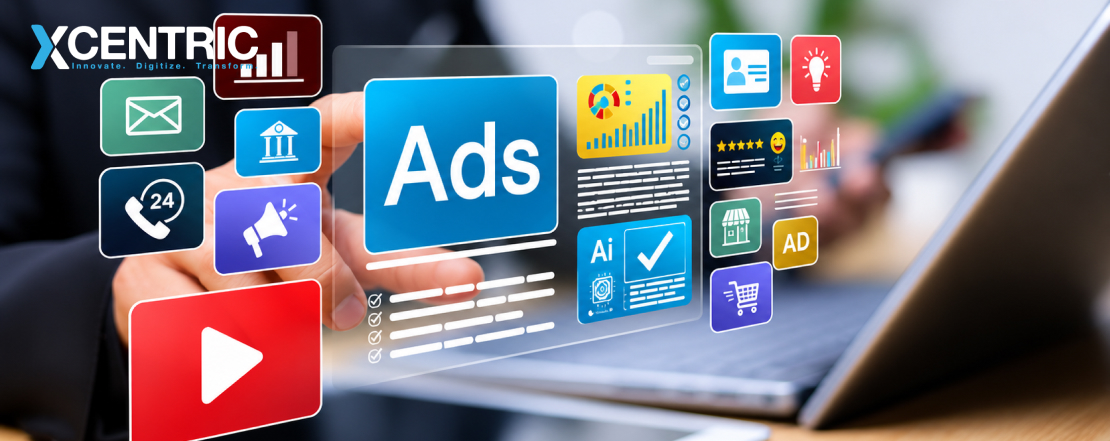
The best Meta ad format is based on your offer, audience, and campaign goal. Different marketing goals can be fulfilled with various types of image ads, video ads, Reels, Stories and instant forms.
Ad Format | Best Application | Creative Recommendation |
Static ads | Product and service promotion | Strong text with a clear call to action |
Video ads | Demonstrations and storytelling | Communicate the main benefit early |
Carousel ads | Multiple products or features | Assign a different function to each card |
The key elements are drawing in with reels and stories, mobile-first discovery and vertical, engaging creative. When you use instant forms, the questions you have should remain relevant and short.
A strong creative must convey three ideas in a short timeframe:
What is the issue you are addressing for your business?
What is it about your offer that should make the customer want to take it?
What should the customer do now?
Be sure to have clear headings, authentic product images, and video demos that demonstrate the product.
The Meta Ad Library can help you find active ads and gain insight into other companies' promotions. A successful campaign requires more than targeting the audience, so creative quality is important. It requires an offer that will generate interest and drive action.
Xcentric Services can assist businesses in merging advertising strategy with professional graphic design, video creative and landing-page building. Explore our Facebook and Instagram advertising guide for additional ideas.
How to Test and Improve Meta Ads During the Learning Phase
Without adequate delivery data, businesses can't be sure of the quality of their optimization choices when it comes to Meta campaigns. The learning phase is the time when Meta's delivery system collects data to learn about a specific ad set.
The number of commonly seen events to optimize as a metric to stabilize delivery is about 50 events in 7 days, as indicated by Meta's guidance. Actual experience will vary by campaign set-up and platform guidance.
Do not make large changes daily, as learning may be affected by too many changes. A/B testing can be used to compare creative, headline, audience or landing pages. Test only one major variable at a time to simplify the results of the test.
After finding a campaign that is generating quality leads, you can try to increase the spend over time, keeping a close eye on CPA and conversion quality.
How to Measure Facebook Ad Metrics: CPA, CTR and ROAS
By using Facebook ad metrics, small businesses can gain insights into how much they have spent, how their audience is reacting to the ads, and if the advertising efforts are yielding profitable results or not.
The most helpful measures are:
Unit | Description | What It Tells You |
CPM | Cost per 1,000 impressions | Cost of reaching an audience |
CTR | Click-through rate | Percentage of impressions generating clicks |
CPC | Cost per click | Average cost of a click |
CPA | Cost per acquisition | Cost of generating a defined conversion |
ROAS | Revenue attributed to advertising relative to spend |
For instance, if your spend is $500 and attributed revenue is $2,000:
ROAS = $2,000 ÷ $500 = 4x
This resulted in a $4 ROI on every $1 invested in the campaign. But 4x ROAS is not necessarily a profitable business.
Determine Break-even ROAS
The formula is helpful to use:
Break-even ROAS = 1 ÷ gross profit margin
When gross profit margin is 40%:
1 ÷ 0.40 = 2.5x break-even ROAS
You need to think of your business as needing about 2.5x ROAS to offset advertising costs, before other operating expenses are taken into account.
If you want more detailed instructions on reporting, read our article on Facebook ad KPIs.
What Are the Most Common Meta Ads Mistakes Small Businesses Make?

When small businesses spend their advertising dollars without a strategy or decide on an ad campaign based on limited performance data, they lose a lot of money.
What are the top 10 Meta Ads blunders small businesses make?
Many small business spend their advertising dollars on programs that are not designed with a strategy or based on incomplete performance data.
Here are some of the most frequent errors made:
Inappropriate goal setting: Optimizing for leads or purchases when those are what the business is trying to accomplish.
Narrow targeting: Targeting is too specific, so delivery opportunities may be limited.
Having too many ad sets: Small budgets are dispersed across multiple campaigns.
Failure to track: If Pixel or CAPI events are not installed, then the measurements of conversions, which are a vital part of tracking, become less reliable.
Frequent changes of campaigns: It is hard to evaluate performance when campaigns are constantly changing.
Weak creative: Generic, unclear offers lack value.
Failure to land on a page: If you don't land on a page, then a good ad will not suffice.
Don't measure clicks when you measure business profits: Traffic is not a measure of business profitability.
Building a focused campaign, measuring meaningful metrics and optimizing on the actual results of customers is the answer.
What Does a 30-Day Meta Ads Launch Plan Look Like for a $20/Day Business?
A small business can test out Meta ads without spreading their budget too thin with a structured 30-day plan.
A 30-day campaign is budgeted at $20/day or $600 total advertising, not including agency fees and creative production.
Timeline | Planned Action | What to Check |
Days 1-3 | Launch one focused campaign and verify tracking | Errors in delivery, approval, tracking and technical errors |
Days 4-7 | Watch for audience response and creativity | CTR, CPC, and early lead quality |
Days 8-14 | Look at conversion data and try a creative tweak | CPA, qualified enquiries and landing page performance |
Days 15-30 | Fine-tune the best approach and assess business results | Cost per qualified lead, sales and ROAS |
The first step is to try to stick to a single campaign, so that you keep most of that $600 in a single ad set.
For instance, a local home services firm may rely on one lead generation campaign, but with only a handful of variations to create.
The first three days should be used for technical checks and not for declaring the campaign a success or a failure. Look at early performance on day 7. On Day 14, check lead quality. On day 30, compare your actual cost of acquisition customers with the target economics.
Thirty days is a first pass evaluation and not confirmation that a campaign is fully developed.
What Xcentric Services Can Do To Improve Your Results With Meta Ads?
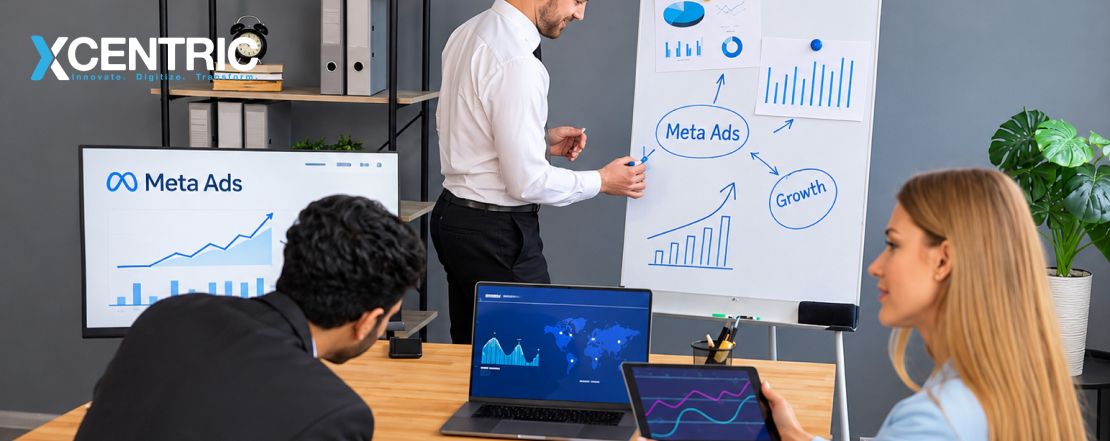
To run profitable ads, you need a coordinated strategy with effective campaign management, advertising audience research, and the creation and tracking of your ads for conversions. Xcentric Services is a company that assists companies in combining these components by leveraging digital marketing and design solutions.
Our support can include:
Strategic campaign planning: choosing the right objectives, budgets and ad organization.
Creative Development: Creating professional images, video advertisements and carousel assets.
Audience research: Creating content targeting and retargeting strategies for the audience.
Tracking implementation: Meta Pixel, CAPI and conversion measurement are supported for tracking implementation.
Optimization of landing pages: Making the website more user-friendly for people clicking on ads.
Performance reporting: Evaluating CPA, ROAS, lead quality and campaign efficiency.
This all-in-one approach is important because the effectiveness of ad performance is not solely affected by the ad. So, everything from your offer, the website, the creative presentation and the follow-up process has an impact on whether a click translates to a customer.
From new users to those looking to enhance their Instagram advertising strategy, Xcentric Services can help create a campaign that is tailored to your goals.
Looking to make advertising investments count towards business opportunities? Revise your Meta ads management and talk through a campaign plan with Xcentric Services.
Create a Smarter Meta Advertising Strategy with Xcentric Services
Small business Meta ads can be a useful method to connect with potential customers, introduce your product or services, create leads, and boost brand awareness. But making ads successful takes more than picking a budget and creating an ad.
The best campaigns include well-defined goals, appropriate audience, knowledgeable creative, trackable results and ongoing tracking and measurement.
Set a sensible budget, experiment with the Facebook ads creative, track CPA and ROAS, and make decisions based on customer acquisition economics.
To avoid wasted ad spend and to create a more cohesive campaign plan, Xcentric Services can help tie the creative design and website optimization to digital advertising.
Frequently Asked Questions
How much should a small business spend on Facebook ads?
The typical test budget for a small business is around $15-$30 a day, based on what the business is targeting and the goal of the campaign. The budget should be set to be cost-effective in terms of necessary testing costs and cost of customer acquisition.
Has Facebook changed the name of its advertising product to Instagram?
Both can be handled by the Meta advertising system and share campaign goals, audiences, as well as reporting instruments. But placements vary between Facebook and Instagram as does creative format.
Is there a specific page on your website where you would like to install the Meta Pixel?
The Rule of Thumb: If you have traffic directed to your site and are looking to optimize for website conversions, it's advisable to include the Meta Pixel or the equivalent (dataset tracking). It helps gauge what users do and offers feedback for optimizing campaigns.
What is a lookalike audience?
A lookalike audience allows advertisers to target new audiences that share some of the attributes of an appropriate target audience, like current customers. It is useful only with good-quality sources and data.
What should be a good ROAS for Meta ads?
There is no standard good ROAS. A profitable target relies on the product margins, operating costs, average order value and customer acquisition cost. Before setting campaign targets, work out your break-even ROAS.
What should the duration of a Meta ad campaign be?
There are benefits to a 30-day initial testing period to get some information about delivery, creative response and lead quality. But there are businesses that require a longer period of time to gather enough conversion data and determine profitability.
Is it possible to get leads from Meta ads for local businesses?
Yes. Geographic targeting, lead forms, messaging campaigns and conversion-focused landing pages can help local businesses create leads from people in their service areas.
Share



Want To Increase Your Ranking On The Search Engines?
Get In Touch With Us!
Trending Blogs
Digital Marketing...
Xcentric Team
8 MONTHS AGO
What To Read Next?

For owners and managers of dental clinics in Lahore, here is a critical fact you...
Xcentric Team
8 MONTHS AGO

The Middle East e-commerce industry is rapidly growing due to increased digital acceptance, mobile-first consumers...
Xcentric Team
9 MONTHS AGO

These days, the e-commerce industry is growing at an exponential rate. With the rise of...
Xcentric Team
9 MONTHS AGO