
Table of Contents
▼
For most businesses, the decision between AWS Lambda vs EC2 comes down to a choice between two different AWS services. In fact, they're selecting two very different cloud operating models.
One of these models (AWS Lambda) gets rid of infrastructure entirely and replaces it with event-driven execution. The other model (Amazon EC2) puts you in more control of infrastructure, but you have to take responsibility for all the associated infrastructure.
That is why the aws ec2 vs lambda decision is often not a purely technical one. It's architectural, operational, financial, and even organizational, sitting at the heart of any custom business solution built on the cloud.
We consistently observe that companies are not having struggles with AWS; it is the other issue that they are having. At Xcentric Services, we're always finding that businesses are not having problems with AWS; it's the other problem that they are having. They have alignment challenges - match workloads to the correct compute model. The consequences of misalignment are always a foregone conclusion: either costs on the cloud rise, or unnecessary complexity in the operation, or systems that cannot scale cleanly under real-world load.
This guide explains not just what AWS Lambda is and how AWS EC2 works, but how they work in production environments, their implications on long-term cost, and how the choice shapes the full stack development work sitting on top of either compute model.
AWS Lambda vs EC2 at a glance

Beyond definitions, it is important to appreciate the system behavior when deployed with real workloads to be able to understand the difference between AWS Lambda vs EC2.
Core Technical Comparison
Dimension | AWS Lambda | Amazon EC2 |
Compute Model | Event-driven function execution | Virtual machine-based compute |
Read-only memory (ROM) | Fully abstracted (AWS-managed) | Fully customer-managed |
Automatic (per request/event) | Manual or Auto Scaling Groups | Scaling Model |
Pricing Structure | Per invocation + execution time | Per instance uptime |
Idle Cost | None | Continuous cost |
Execution Duration | 15 minutes max per invocation | Unlimited runtime |
Runtime Control | Restricted environment | Full OS-level control |
Deployment Model | Stateless functions | Stateful or stateless applications |
Operational Overhead | Very low | Moderate to high |
Business Decision Matrix
Business requirement | More suitable option |
Scaling up and down quickly with minimal DevOps | Lambda |
Performance workloads that can be predicted | EC2 |
Event-driven architecture | Lambda |
Hosting legacy applications | EC2 |
Highly variable traffic | Lambda |
Long-running processes | EC2 |
Cost efficiency at low usage | Lambda |
Cost efficiency at sustained load | EC2 |
This is one surface-level AWS Lambda vs. EC2 comparison, but there's much more to it than that.
What AWS Lambda and EC2 Actually Represent in Modern Cloud Architecture
You have to grasp the concept of what each represents in a modern cloud ecosystem, and not what they do technically when comparing AWS Lambda vs EC2.
AWS Lambda: Execution Without Infrastructure
Run code without managing infrastructure on AWS.Run code without infrastructure on AWS. AWS Lambda is a serverless computing service that runs your code in response to events without making provisioning or managing servers.
You don't deploy apps onto servers; you deploy functions that are run when triggered by external or internal events, including:
API Gateway requests
S3 object uploads
DynamoDB updates
EventBridge schedules
SQS/SNS messaging events
One key development in Lambda is the increased compute capacity. It now has a capacity of up to 10240 MB in allocation that can accommodate more compute-intensive workloads than previous generations of servers.
The 15-minute time limit per invocation is still enforced firmly by Lambda, though, and it defines the architectural boundary, thereby greatly shaping the decision of when it is and is not applied.
What Lambda actually optimizes for:
Eliminating infrastructure management
Automatic scaling
Pay-per-use cost efficiency
Event-driven system design
Developer productivity
Lambda's effect on business is more to reduce friction in the way you do business than to reduce your costs. This is a significant difference and is frequently misinterpreted when discussing the cost of aws lambda vs ec2 in the early stage.
Amazon EC2: Full Control Over Compute Infrastructure
Amazon EC2 provides virtual machines that behave like traditional servers, but run in the AWS cloud.
The configuration of the operating system (through AMIs)
Volumes (EBS volumes)
Networking components (VPCs, subnets, Routing tables)
The security configuration consists of IAM and security groups
Scaling strategy (Auto Scaling Groups or manual scaling)
EC2 instances continue to run until they are shut down. This leads to predictable performance, but also carries with it an idle cost risk.
The things the EC2 is optimized for:
Infrastructure control
Predictable performance
Long-running workloads
Stateful applications
Custom system environments
In aws ec2 vs lambda architecture planning, EC2 is considered the “control layer” because it provides control, and Lambda is the “automation layer” as it provides automation.
Why AWS Lambda vs EC2 is a Business Architecture Decision
One of the most frequent errors made in the comparison of AWS Lambda vs. EC2 is to make a technical choice and not a business architecture choice.
In practice, this decision impacts:
Business Dimension | Impact |
Time to Market (TTM) | Speed of feature delivery |
Operational cost structure | Fixed vs variable cloud spend |
Engineering allocation | Product vs infrastructure focus |
System scalability | Reactive vs pre-planned scaling |
Real-world consulting observation (Xcentric Services)
We constantly encounter three patterns when it comes to cloud migration and transformation projects:
EC2-heavy organizations
A stable infrastructure that is over-provisioned
A high up-front monthly charge
Slow scaling adjustments
Lambda-heavy organizations
Fast-moving and agile
These unexpected cost increases are unexpected
Architectural constraints at high load levels
Balanced architectures
Hybrid lambdas, EC2, ECS, and Step Functions
Optimized cost-to-performance ratio
Architectures that can be scaled and maintained
Very rarely are the most "mature" organisations "Lambda-only" or "EC2-only" organisations. They develop into hybrid systems through deliberate technology stack optimization.
Choose AWS Lambda If Your Business Prioritizes Elasticity and Operational Simplicity
When development teams don't want infrastructure to be a concern, AWS Lambda is the better choice in the AWS Lambda vs. EC2 decision.
It's good to seriously consider Lambda when:
You don't work on a day-to-day basis, but rather when something happens
Traffic is volatile or "bursty"
You want to completely remove the need to manage the servers
You're creating microservices or systems built on custom API development
Time to deploy needs to be as quick as possible and not overly dependent on DevOps
Real-world Lambda architecture patterns
Pattern | Why Lambda Fits |
Event processing pipelines | Trigger-based execution |
API microservices | Automatic scaling per request |
Webhook handling systems | Burst traffic management |
Background processing jobs | Short-lived execution cycles |
Data transformation workflows | Stateless compute model |
Practitioner insight
The one thing most people miss out on is the fact that Lambda is not cost stuff, but engineering throughput stuff in real systems. Teams accelerate as they no longer need to deal with infrastructure state management, scaling logic or server lifecycle issues.
This benefit isn't as great if you have workloads that are high-volume or have long compute periods.
Choose Amazon EC2 If Your Business Requires Stability, Control, and Long-Running Compute
People tend to oversimplify cost discussions in aws lambda vs ec2 cost comparison.
The assumption is:
The price of lambda is always lower
EC2 is always more expensive
In actuality, both are not always true.
Cost behavior comparison
Workload Type | Lambda Economics | EC2 Economics |
Low traffic | High speed of the traffic | Often low speed of the traffic |
High frequency of traffic spikes | Ideal fit | Risk of overprovisioning traffic |
High sustained load | May be expensive | More cost stable |
Predictable load | Variable cost | Predictable cost |
The cost that changes depending on demand is a variable cost. While this is a fantastic idea, it is not necessarily feasible in the real world.
Real-world cost failure patterns
In Xcentric Services' experience, there are two predominant failure modes:
1. Overprovisioned EC2 architectures
The over-capacity is “just in case”
Low utilization rates
High fixed monthly burn
2. Overextended Lambda architectures
Uncontrolled invocation growth
Scaling execution cost unexpectedly
The capacity of architecture to withstand loads over a long period
The true optimization problem is choosing between AWS Lambda and EC2. It's configuring the workload shape and cost model.
Performance, Latency, and User Experience in AWS Lambda vs EC2
In this study, we compare the performance, latency, and User Experience of AWS Lambda and EC2. We compare AWS Lambda with EC2 with respect to performance, latency, and User Experience. Performance is more than fast in AWS Lambda vs. EC2; it's consistent in real-world situations.
Performance comparison
Factor | Lambda | EC2 |
Cold starts | Possible | None |
Response consistency | Variable | Stable |
Real-time workloads | Moderate | Strong |
Long-lived connections | Limited | Fully supported |
Cold starts are frequently misinterpreted. While they are small in most of the backend systems, in user-facing systems they feed directly into how page speed affects conversions.
AWS provides Provisioned Concurrency to minimize this impact, but it adds other cost considerations that need to be considered when planning architecture.
Modern AWS Architectures: Lambda vs EC2 Is Not the Full Picture
Modern cloud systems don't tend to use just AWS Lambda vs EC2. Rather, they are used for several services:
Service | Role |
Lambda | Event-driven compute |
EC2 | Core application layer |
ECS | Container orchestration |
Fargate | Serverless containers |
AWS Step Functions and Long-Running Workflow Design
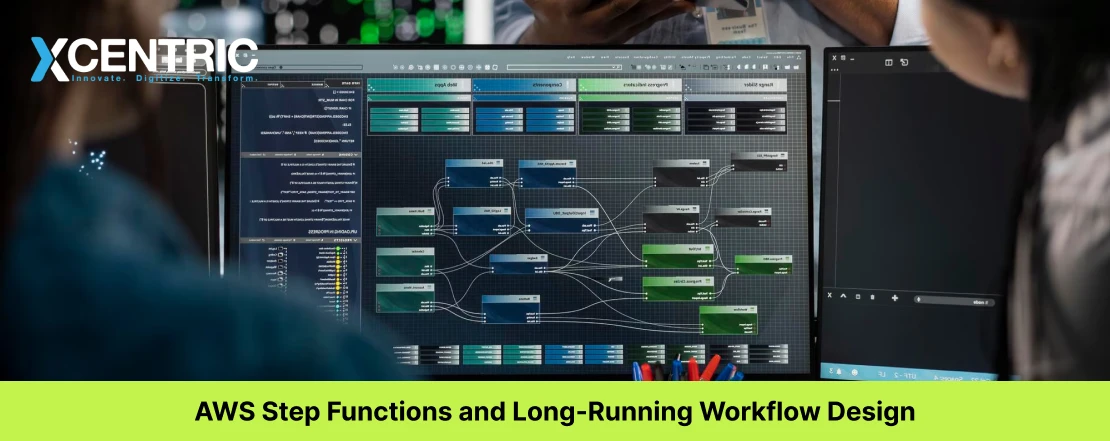
One of the common misconceptions when talking about AWS Lambda vs EC2 is that you think long-running processes require EC2. AWS Step Functions supports orchestration of workflows that can be long or complicated, such as multi-step business logic, processing pipelines, and approvals.
It enables organisations to keep their serverless architectures even when it comes to complex workflows. Your business should use AWS Lambda or EC2, each for distinct purposes.AWS Lambda is not for use in every scenario and is not a replacement for EC2, but rather, a solution for different scenarios.
The aws lambda vs ec2 choice is not one that is taken in isolation. It's part of a larger cloud migration strategy that incorporates architecture, cost-optimization, scalability planning, and modernization.
The best cloud environments are not cloud that is Lambda or EC2. They are based on the intelligence of the placement of every workload.
Why Choose Xcentric Services
When deciding between AWS Lambda vs EC2, Xcentric Services can assist businesses in making an informed choice. Xcentric Services can help businesses make informed decisions between AWS Lambda vs EC2.
The choice between AWS Lambda and EC2 is seldom a standalone choice. It's a wider cloud strategy that includes cloud architecture, optimizing costs, planning for cloud scalability and modernization.
We support organisations in a number of ways at Xcentric Services:
Analyze workload behavior
Design cloud-native architectures
Optimize the cost of the AWS architecture
Minimize the AWS cost
Modernize legacy systems
Create Hybrid Serverless + EC2 setups
Adopt scalable cloud migration approaches
Modernize legacy systems through custom web development
Not all cloud environments are best characterized as Lambda or EC2. They are characterized by their intelligent placement of the workloads.
Conclusion
The choice of AWS Lambda vs EC2 is not one of winners and losers. It's as simple as picking the right compute model for the wrong workload.
AWS Lambda is ideal for systems that are unpredictable, event-driven, and require automatic scaling with no infrastructure management. It saves on overhead and improves team speed. Amazon EC2 is ideal for applications that need predictable performance under sustained or heavy workloads, require full control of the operating system, and demand continuous availability. Use this simple decision framework to help you choose between AWS Lambda and EC2.
Use AWS Lambda if:
Workload is event-driven
Traffic is unpredictable
You want to have as little maintenance of your infrastructure as possible
Use EC2 if:
Application runs continuously
You should have full control of the operating system
They need to keep the same level of performance at all times
Xcentric Services comes into play here, helping businesses determine the right choice and backing it with ongoing website support and maintenance. We collaborate with organizations to build AWS solutions that support actual workloads and not assumptions. Rather than force you to think of a “Lambda-first” or “EC2-first” solution, we'll analyze your requirements and design a cloud architecture around that
Frequently Asked Questions (FAQs)
Does Lambda cost less than EC2?
Absolutely, AWS Lambda is typically less expensive for low or variable workloads since you only pay while the code is running. EC2 may be more cost-effective for more consistent, higher-traffic applications because the cost of reserved capacity is paid upfront.
Will you use Lambda for EC2 entirely?
No, Lambda isn't going to be a replacement for EC2 as it has a 15-minute execution time limit, no access to the OS and isn't appropriate for stateful or long-running applications. In most real systems, both are employed as a combination, depending on the workload.
When do you use EC2 vs Lambda?
Consider EC2 if you require a persistent runtime, full server control, or if you want consistent performance. It makes better sense for databases, legacy systems and high-performance applications that don't meet the constraints of serverless.
How long can AWS Lambda run for?
AWS Lambda has a 15-minute execution time limit per request. Usually, longer workflows are implemented on EC2/ECS or services such as AWS Step Functions.
Can I host a website on Lambda rather than EC2?
Yes, but primarily for web applications that are serverless or API based. EC2 is a better choice for stateful and more traditional applications, such as those implemented as web applications, which require complete server control.
So, what is really meant by 'serverless' when it comes to AWS Lambda?
Yes. AWS Lambda is serverless because AWS takes care of all scaling, infrastructure, and maintenance. Only write and deploy code, not manage servers.

Share



Want To Increase Your Ranking On The Search Engines?
Get In Touch With Us!
Trending Blogs
Digital Marketing...
Xcentric Team
6 MONTHS AGO

What To Read Next?

For owners and managers of dental clinics in Lahore, here is a critical fact you...
Xcentric Team
6 MONTHS AGO

The Middle East e-commerce industry is rapidly growing due to increased digital acceptance, mobile-first consumers...
Xcentric Team
7 MONTHS AGO

These days, the e-commerce industry is growing at an exponential rate. With the rise of...
Xcentric Team
7 MONTHS AGO