
Table of Contents
▼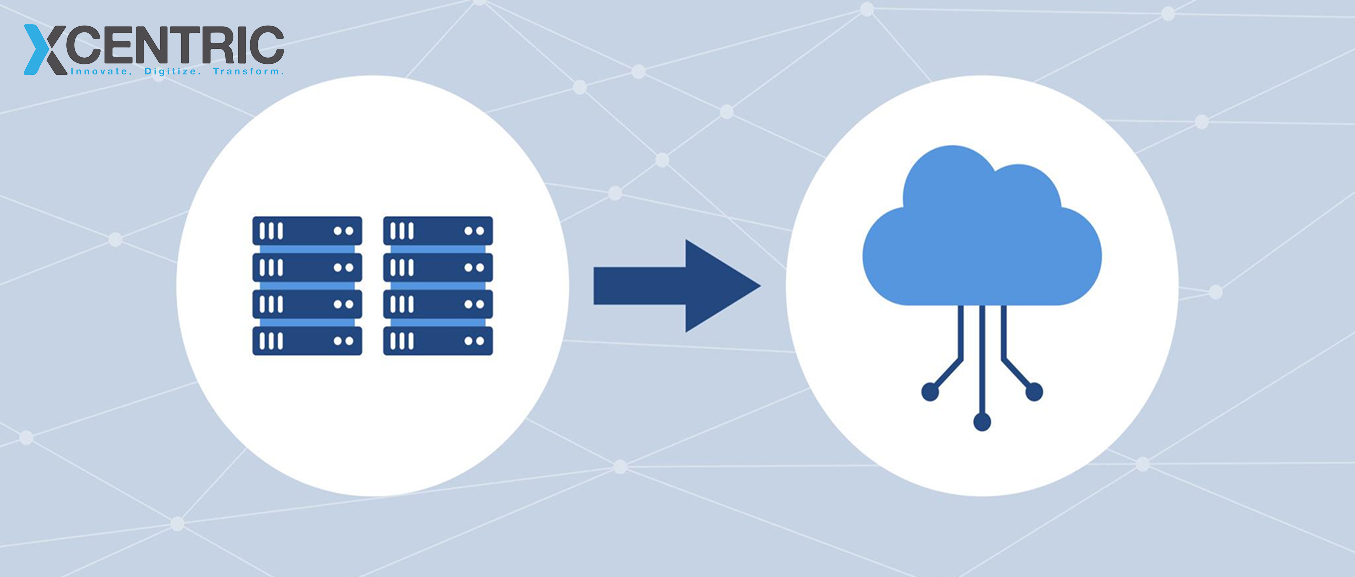
A cloud migration strategy is not an IT document; it's a business risk control plan. If not, migrations are frequently over budget, on time and have a major impact on operations. According to Medhacloud's IDC statistics (March 2026), the proportion of cloud migration projects that run over budget is 38%, while the average overrun is 23% when compared with the planned migration cost, and 31% of migrations exceed timelines. Typically, these issues have nothing to do with cloud platforms. These are the result of bad planning, poor ownership and inadequate validation steps.
Stable migrations are distinguished from costly outages by a well-defined zero-downtime cloud migration approach. Most organizations are not really thinking about moving to the cloud; they are thinking about the move without disrupting revenue, customers, or their internal operations.
If you're still deciding if the cloud is the right choice for your business, this guide expands on our previous piece What Is Cloud Migration and When Do You Need It? which covers the basics of cloud migration and the early signs for businesses to consider planning.
The guide is tailored for decision makers, CTOs, IT directors, and business owners who want a cloud migration strategy that minimizes risk, ensures uptime, and prevents unnecessary cost escalation. It goes beyond pure technical theory and is geared toward execution from a business continuity point of view.
What is a Cloud Migration Strategy?
A cloud migration strategy is the blueprint business and technical plan that outlines which systems to move to the cloud, how, when, and by what process.
A business view aims to make sure that migration is not seen as a purely technical "change", but a managed change of infrastructure, cost structure and operational risk. A good strategy is one that offers stability, uptime and financial predictability, and not simply moving systems around.
The 6 Rs of the Cloud Migration Approach to Business Value
The first step on any successful migration is to select the right approach for each workload. The 6 Rs framework will ensure that you are not treating all systems the same, as not all systems have the same risk or value.
Rehost (Lift and Shift): When speed is more important than optimization, it is usually the option of choice. Quickly moves applications as they are and saves you from unnecessary upfront work and time. This is used by many organisations for legacy systems requiring fast and minimal changes in order to move to a new location.
Replatform: Small change to leverage cloud capabilities without re-engineering. It is the “business safe modernization” alternative, which is a balance of effort and benefit.
Refactor/Re-architect: is a strategic investment. It means rebuilding apps for the cloud-native performance, scale, and resilience. It is more costly and time-consuming, but can offer the highest long-term ROI.
Repurchase: It is the process of replacing existing systems with SaaS. This is frequently for business efficiency reasons and not for technical reasons.
Retain: It is used to store some workloads on premises where that would not be financially or operationally feasible to migrate, typically because of compliance, latency or legacy requirements.
Retire: It removes unused systems prior to migration, lowers costs and streamlines the environment.
Cloud Migration Steps: A Business-Led Execution Model
A sound cloud migration plan is executed in a well-defined manner that minimizes risks and uncertainty. It starts with establishing success criteria. This includes establishing measurable goals like uptime, cost savings, and performance standards before migration efforts start. If this were not the case, the success of migration would be subjective.
The next step in a cloud migration assessment is identifying infrastructure, dependencies, and operational risks. Often, there is hidden complexity here, particularly when dealing with legacy environments. The workloads are then categorized under 6 Rs, which ensures that migration decisions are made based on the business value and technical suitability.
Workloads are classified and placed in workload waves. This wave planning approach allows for the migration of low-risk systems before high-risk systems are migrated when there is even greater confidence.
A pilot migration follows after that. It is one of the most critical parts of the process as it ensures that assumptions, tools and team readiness are proven before scaling up the migration across the organization.
Then, it is executed in controlled waves, validated, tested and finally cut over.
Step | Business Outcome |
Establish success criteria | Link migration with business objectives |
Cloud readiness assessment | Identify risk before investment |
6 Rs classification | Avoid wrong migration decisions |
Wave planning | Minimize exposure to waves during operations |
Pilot migration | Minimize exposure to waves during operations |
Execution in waves | Controlled rollout |
Testing and validation | Prevent production failure |
Cutover | Safe transition of operations |
Post-migration optimization | Improve cost and performance |
Cloud Migration Assessment: The Step That Protects Your Budget
If you want to use predictable cost and stable execution, you can't avoid a cloud migration assessment. It gives a complete view of systems, dependencies, compliance needs, and operational risks prior to any migration.
Medhacloud found that those organizations that have undertaken a structured cloud migration assessment have 2.4x higher success rates (March 2026). This is because most migrations go wrong due to unknown dependencies and underestimated complexity. Business-wise, the stage is a safeguard against the most costly scenarios: unplanned downtime and out-of-control budget growth.
Assessment Area | Business Impact |
Application dependencies | Prevents system outages |
Infrastructure readiness | No performance gaps |
Compliance requirements | Reduces legal and audit risk |
Data volume analysis | Controls migration cost |
Team capability review | Avoid execution errors |
A seamless cloud migration depends on the traffic, data and system dependency management during cloud migration.
The whole business is not revealed at once, with wave-based migration. Rather, systems are shifted in regulated groups to ensure that risk is managed.
The most important enabler is database decoupling. No moving of applications and databases, data is replicated in real-time as the systems are running. When validation is completed, the traffic is switched with minimal disruption. This is one of the most important enablers for moving to the cloud without any downtime.
How to Migrate to the Cloud Without Downtime
Business continuity model in which the two identical environments are blue-green. One is active, and one is ready and tested. Traffic is automatically rerouted when validated. This facilitates quick recovery in case of problems.
Falls back are available with Blue-Green Deployment and is used widely in enterprise scenarios where uptime is crucial.
Database decoupling is the most important enabler. Applications and databases are not moved; instead, the data is replicated in real time as systems are running. After validation, no disruption to traffic. One of the most important enablers of zero-downtime cloud migration is this.
Zero Downtime Deployment Techniques That Reduce Business Risk
A business continuity model in which two identical environments exist is blue-green deployment. One is active and the other is ready and tried. After validation, traffic is instantaneously switched. This will facilitate quick healing in case of any problems.
Due to its direct fallback path, Blue-Green Deployment is popular in enterprise environments where uptime is paramount.
With Canary deployment, traffic is slowly diverted to the canary environment, minimizing the risk. A fraction of the user base is moved first, and then problems are identified before there is a full rollout. For customer-facing applications that can have a significant effect on both revenue and brand trust even for minor disruptions, Canary Deployment is particularly useful.
Systems are incrementally replaced by rolling updates in order to minimize infrastructure duplication expenses and increase deployment time.
Technique | Business Advantage |
Blue-green deployment | Instant rollback feature |
Controlled risk exposure | Canary deployment |
Move toward infrastructure cost reductions | Lower infrastructure cost |
Cloud Migration Testing | Avoiding costly production failures |
Cloud Migration Testing: Preventing Expensive Production Failures
Cloud migration testing involves testing systems to make sure that they will function as planned before they are 100% moved. This involves smoke testing to check basic functionality, load testing to simulate real traffic and user acceptance testing for confirmation of business requirements.
A full backup and rollback plan should be in place when testing is started. If not, any downtime during the cutover could turn into a business outage rather than a controlled recovery. There are some risks associated with migrating to the cloud, and avoiding business disruption is key to navigating them.
Cloud Migration Risks and How to Avoid Business Disruption

A poor cloud migration strategy carries known risks, directly affecting revenue and stability. The biggest threat is unplanned downtime, which is usually when systems are not fully validated during cutover. When databases are not decoupled and replicated properly during migration with live applications, there's an increased risk of data loss or corruption.
When the data gravity effect is present, migrations are more likely to have structural delay because the large amount of data pulls in other systems that are tough to uncouple. This makes the process time-consuming and cost-consuming.
Security Misconfiguration is another significant post-migration challenge, accounting for 57% of the incidents, per Gitnux (April 2026). This is not a platform failure, but an implementation failure.
Other risks include unmanaged dependencies, internal skill shortages and lack of rollback strategies. Having a cloud migration rollback strategy is crucial if the migration doesn't go as planned.
Risk Area | Business Impact |
Loss of time for cutover | Revenue loss |
Loss of data | Disruption to operations |
Misconfiguration | Security exposure |
Unexpected outages | Legacy Dependencies |
No plan for rollback | Prolonged recovery period |
Cloud Migration Cost: What Businesses Need to Plan For
Cloud migration cost is based on the system complexity, data volume and the approach to cloud migration. Medhacloud estimates mid-market migrations at about $280,000, with enterprise-scale migrations costing $1M - $4M or more, depending on scope and compliance requirements. These are indicative values and need to be confirmed by a formal evaluation.
In addition to initial migration, there may be recurring inefficiencies which can lead to higher life cycle costs. If FinOps is not applied early, 20-30% of cloud spend is likely lost as a result of idle or over-provisioned resources and data egress fees are often 6-12% of the total migration cost.
Cost Driver | Business Risk |
Infrastructure setup | Upfront capital |
Data migration | Variable cost exposure |
Egress fees | Hidden long-term cost |
Tooling | Vendor dependency cost |
Cloud waste | Ongoing inefficiency |
Cloud Migration Best Practices: What Separates Successful Migrations
The first and foremost is to conduct a cloud readiness assessment prior to vendor/ platform selection. This makes it impossible to make decisions about technology without knowledge of real constraints on the system.
For each workload, it is important that you adopt a personalized approach for cloud migration versus a “one size fits all” strategy, with the 6 Rs model. That means that there is no unnecessary risk for critical systems.
Waves are still one of the best methods for managing operational risk. Low-risk systems are migrated first to gain confidence before moving critical systems.
There is no choice but pilot migration. It is the only method and solution that guarantees validation of your architecture, processes and team capability before full rollout.
Practice | Business Outcome |
Readiness assessment | Reduced failure rate |
Pilot migration | Early risk detection |
Wave planning | Controlled execution |
Day one FinOps | Cost control |
Rollback planning | Operational safety |
What makes Xcentric the Ideal Choice for Cloud Migration?
The selection of partner can make the difference between a controlled migration and a costly disruption. Xcentric is all about creating a business-first cloud migration strategy, not merely moving infrastructure. This means that business objectives, business risks, and needs for uptime are all understood before any decisions are made pertaining to the technology.
The unique thing about Xcentric is that it is systematic and addresses the entire lifecycle, from assessment to planning, execution, and optimization. Xcentric does not consider migration to be a one-off project, but rather creates a controlled roadmap complete with dependency mapping, workload classification (6 Rs) and wave-based execution to minimise operational risk.
There's also a strong emphasis on the execution of Zero Downtime Cloud Migration. This involves real-world methods, such as phased cutovers, real-time data sync, rollback planning, and deployment considerations that ensure live systems are protected during the transition process. The objective is straightforward: business continuity, while background infrastructure changes occur.
In addition to migration, Xcentric also focuses on optimising after migration. Post go-live costs are often underestimated, but can creep up on the business without FinOps monitoring and resource right-sizing. From the start, Xcentric makes cost control an integral part of the strategy and not just an afterthought.
Conclusion
Cloud migrations don't succeed in terms of speed, but in terms of how well the business continues to function throughout and after the move. Without a well-planned approach to cloud migration, businesses are likely to experience common issues such as downtime, budgetary constraints, and inconsistent performance.
The most successful migrations are grounded in preparation: clearly defining success criteria, conducting a solid cloud-readiness assessment, planning migration workload by workload, and carefully orchestrating workload migrations by waves using the 6 Rs. Additionally, blue-green deployment, canary rollout and real-time data replication help to mitigate risks and make zero-downtime migration a possibility in real-world deployments.
Xcentric offers a range of cloud migration services and cloud migration consulting to guide organizations through every aspect of the migration process, ensuring it is both business-centric and low-risk. Cloud migration is a business transformation decision, rather than an IT upgrade. When well implemented, it can increase scalability and lower overall costs to support long-term operations and provide a more scalable technology backbone for future expansion.
When businesses are looking at what they should do next, having an experienced partner can take the risk of executing off the table. Xcentric enables organizations to plan and deliver migration programs from day one with stability, cost control, and continuity.
Frequently Asked Questions (FAQs) About Cloud Migration Strategy
What is a cloud migration strategy?
A cloud migration strategy is a business and technical approach to determine how applications, data and infrastructure will be transitioned from on-prem to the cloud. It defines the movement, the "stay" and how each system will be safely transitioned. A good strategy minimizes downtime risk, manages cost and optimizes migration to benefit the business rather than its detriment.
What are the 6 Rs of cloud migration?
The 6 Rs are Rehost, Replatform, Refactor, Repurchase, Retain and Retire. An “R” is a different approach to a workload for migration. Rather than move each system, the 6 Rs provide a framework for businesses to determine whether applications should be moved as-is, enhanced, replaced, retained on-premises or phased out altogether.
How to move applications to cloud without downtime?
The careful planning, wave-like execution and synchronization of data in real-time all contribute to ensuring zero downtime migration. Using tools such as blue-green deployment and canary deployment provides the ability to route traffic slowly or abruptly to new or updated services without impacting users. In many instances, the databases are replicated in real-time, and applications can run in parallel while the replication takes place.
What is blue-green deployment?
Blue-green deployment is a practice that involves running two identical environments side by side. One environment is used for live traffic, and the other is prepared, tested and validated. When it's ready, traffic goes to the new environment. In case there is a problem that comes up, traffic can easily return to the original environment, minimizing the risk of downtime.
What is a canary deployment?
A small percentage of users are moved to the new system over the course of a few days in a canary deployment before the rollout is complete. This helps teams detect performance or stability issues early without impacting all users. If issues are identified, it can be halted or reverted before being exposed to a wider audience.
What are the biggest risks of cloud migration?
The major challenges are that the system may be down during the cutover, the information can be lost when migrating, security configuration issues may occur, and there could be some system dependency that wasn't documented back then. In addition, cost overruns also occur when the workload is not properly assessed. The risks are typically not attributed to the cloud but to insufficient planning and a lack of validation prior to execution.
What is the time required for moving to the cloud?
It will depend on the size of the system, complexity and preparedness. The time can vary depending on the size of the environment (from a few months for smaller environments to months for enterprise migrations, due to dependencies, compliance needs and phased implementations). An effective migration plan can minimize rework and unexpected delays.
What is the cost of cloud migration?
The costs depend on the infrastructure size, amount of data to be migrated, and the migration strategy. Migration that lies within the mid-market can easily cost hundreds of thousands of dollars, and migrations of large enterprises can exceed multi-million dollar budgets. Ongoing optimization is crucial after initial migration, as it can reduce cloud costs over time, such as by eliminating idle resources.

Share



Want To Increase Your Ranking On The Search Engines?
Get In Touch With Us!
Trending Blogs
Digital Marketing...
Xcentric Team
6 MONTHS AGO


What To Read Next?

For owners and managers of dental clinics in Lahore, here is a critical fact you...
Xcentric Team
6 MONTHS AGO

The Middle East e-commerce industry is rapidly growing due to increased digital acceptance, mobile-first consumers...
Xcentric Team
7 MONTHS AGO

These days, the e-commerce industry is growing at an exponential rate. With the rise of...
Xcentric Team
7 MONTHS AGO