Table of Contents
▼Hospital Cafeteria Management Software: Meals Management For Staff, Patients, and Visitors
- Jul 17, 2026
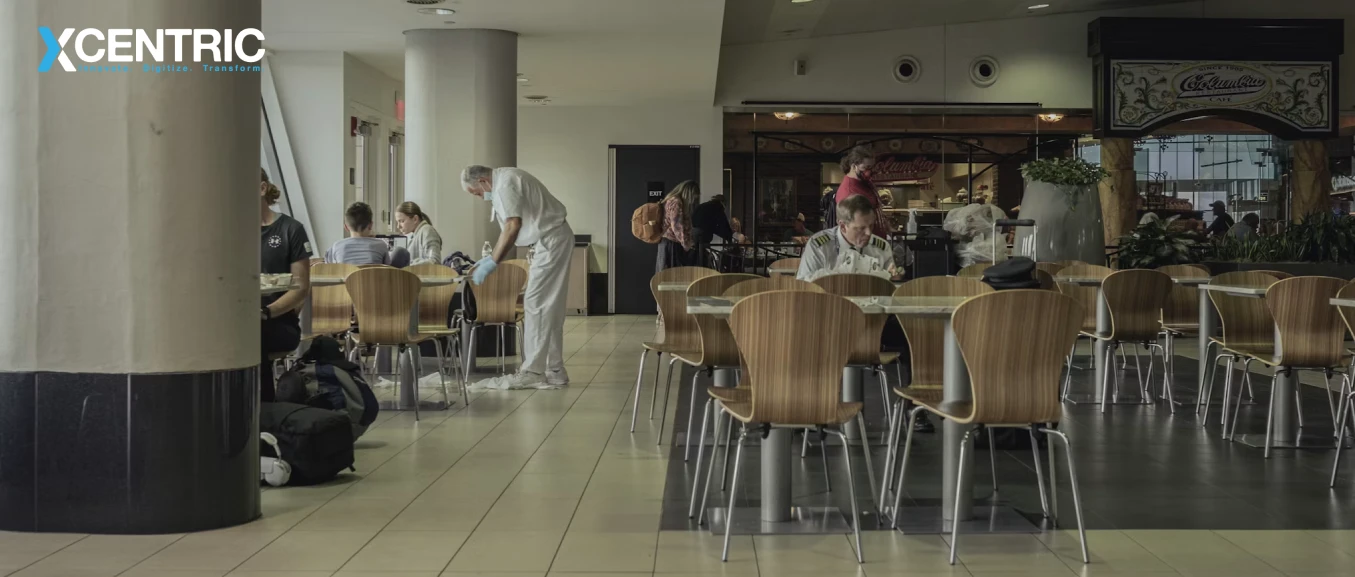
The services that hospitals provide for food are more advanced and complex compared to food services in a corporate cafeteria or school cafeteria setting. Hospitals must be able to efficiently staff and run a food service that satisfies the needs of many different food service areas and many different food service clients. These include staff cafeterias, visitor food service areas, patient meal services, and various food safety and dietary compliance programs.
Because of the many different services and needs, many different healthcare institutions have modernized and invested in their hospital cafeteria management software. These systems manage multiple food service operations and allow for differentiated and distinct procedures for each of the client user groups.
One of the most common failures that healthcare facilities experience is trying to solve a technology problem for cafeteria services and patient food services by using the same technology. The answer will most likely be separate systems due to the many processes, security, integrations, reporting, and so on that are required.
At Xcentric Services, we tailor meal management solutions that align operational and clinical needs for hospitals, healthcare networks, specialty clinics, and medical campuses. Our solutions, built specifically for healthcare, address challenges in cafeteria operational efficiency, management of patient dietary orders, hospital systems integration, and reporting consolidation among multiple facilities.
In this document, we review how modern hospital cafeteria management systems accommodate staff, patients, and visitors, and how these systems enable healthcare organizations to meet operational efficiency, compliance, and service delivery requirements.
What Hospital Cafeteria Management Software Does?
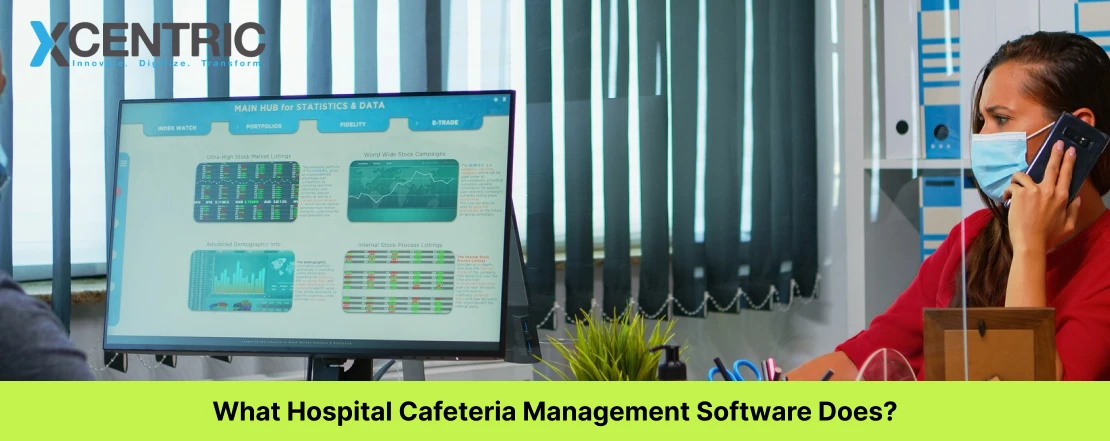
Hospital administrators should be aware that hospital food service consists of two different systems. The first is the staff and visitor cafeteria. This service is like a retail food service operation where staff and visitors buy meals, beverages, and snacks through a point of sale system.
The second service is patient meal management, which is a component of the clinical care process. Patient meals are determined by what the physician orders, dietary needs, allergies, and a nutritional care plan.
While both systems serve the function of food service, they serve different operational needs.
The typical cafeteria service has the following operational needs:
Transactions without cash
Payroll deduction cafeteria sales
Meal credits
Self-service
Sales and revenue controls
Stock control
The patient system has focused on:
Dietary orders from a clinical perspective
Nutritional needs
Allergy considerations
Meal delivery
Workflows integrated with hospital systems
Patient data control
The difference in operational needs is critical because the moment patient data is involved, the technology changes dramatically.
Xcentric Services helps healthcare organizations assess operational variations and provides integrated solutions in supporting cafeteria and patient nutrition operations with minimal complexity.
Staff and Visitor Cafeteria Characteristics

Typically, hospital cafeterias may operate for long hours with varied users, which may include staff and visitors, with varied payment and/or no payment options. A hospital cafeteria management software system should be able to accomplish these operations in the best interest of the staff and visitors.
Kiosks and Payroll Deduction
A hospital staff's convenience may be generally expressed as the speed of service. Long lines at the cafeteria can be especially frustrating for staff, especially for clinical staff with demanding hours.
Kiosks that offer self-service can be one way to alleviate the long lines, as staff is able to view the menu and make a payment at their own convenience.
Hospitals that offer payroll deduction as an option to cover the cost of the meal streamline the payment and eliminate the need for staff to bring cash.
Some of the other benefits of self-service kiosks include:
Savings to the cashier’s time
Improved tracking of the purchase
Easier to balance the books
Improved convenience for staff
Improved reporting
Xcentric Services integrates a payroll deduction system into hospital management to offer a self-service cafeteria system.
Flexible Meal Credits for Shift Employees
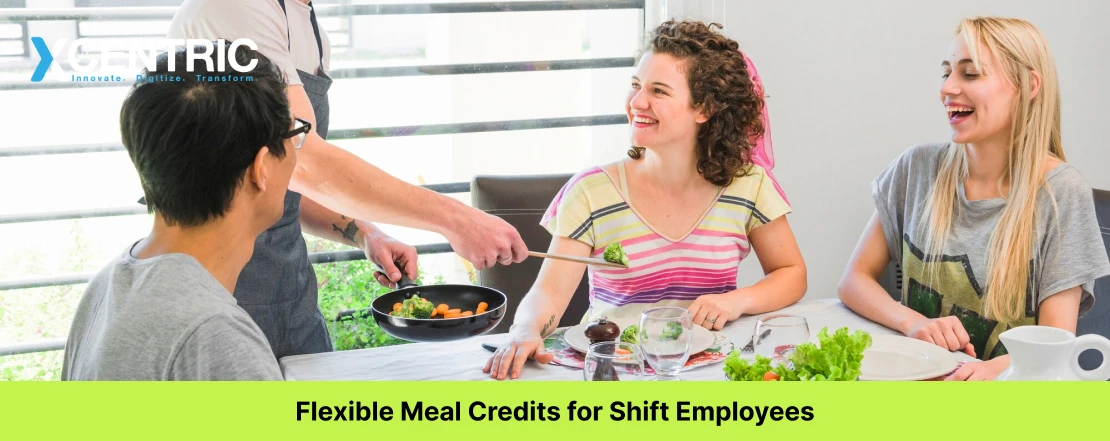
Because hospitals offer round-the-clock services, staff meal access offers credits that vary by staff's shift schedule. Night shift staff and on-call staff may receive meal credits or allowances as an employee benefit.
A modern cafeteria management software system can bring automation to these employee benefit programs with configurable meal credit options. Directors can choose among:
Daily meal benefits
Shift-based credits
Department-related privileges
Short-term meal benefits
Advertised meal initiatives
Meal benefits for employees
Automating benefits distribution decreases manual operations while zeroing in on the equity of benefits across departments. Xcentric Services aids healthcare companies in adopting flexible meal credit systems based on workforce policies and the (day-to-day) operations.
Centralized Reporting for Multiple Campuses
Healthcare companies house several facilities, outpatient clinics, specialty hospitals, and satellite campuses. Without centralized reporting, administrators find it difficult to assess multiple locations’ cafeterias. With superior reporting, your leadership can assess:
Revenue
Transactions
Meals
Inventory
Dining trends
Metrics by location
Centralized reporting showcases the inequities and potential for improvement. Xcentric Services offers hospitals and food service managers unique, custom reporting dashboards that provide invaluable data, as opposed to the endless generic reports that provide no value.
Patient Meal Management and Dietary Compliance
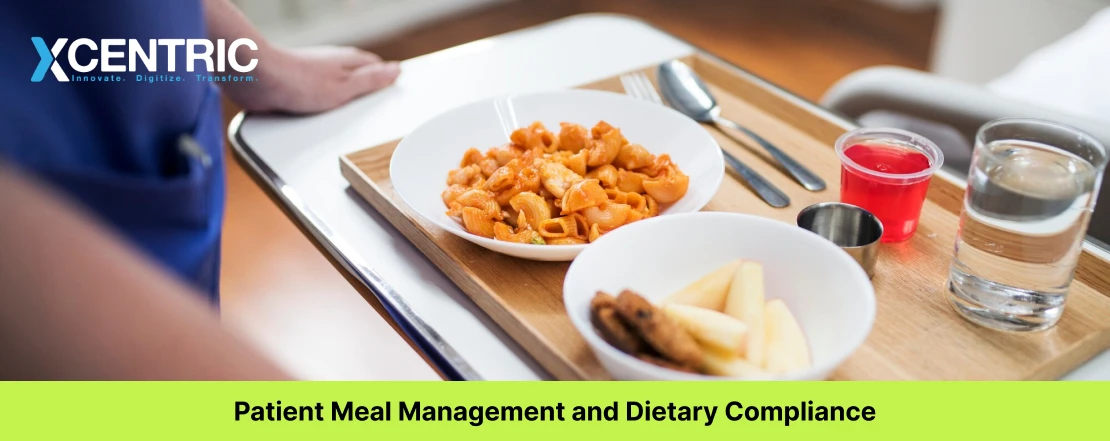
Managing patients' meals presents a totally new set of challenges. Clinics managing a patient’s meal need to incorporate far more than a cafeteria purchase, and often need to include health-related, confidential information.
To assist clinics in managing the nutrition for patients and maintain accuracy and compliance within the healthcare system, Xcentric Services developed a system for managing patient meals.
Dietary Orders, Tray Tickets, and the EHR Connection
Choices of foods may not be based on patient preference, but rather on clinical needs. Orders by physicians, dietitians, or nutrition teams can affect food preparation or delivery.
Examples include:
Renal diets
Low-sodium diets
Diabetic meal plans
Cardiac diets
Tube-feeding protocols
Texture-modified diets
Such dietary requests are usually triggered from the Electronic Health Record (EHR) and passed down to the meal management process.
The system can then produce:
Tray tickets
Meal labels
Dietary production reports
Kitchen preparation instructions
Patient meal schedules
Nutrition summaries
Accurate integration minimises manual data entry and supports meal provision for patients, according to clinical needs.
Xcentric Services focuses on healthcare system integrations that integrate a meal management platform with an EHR environment and the wider "hospital management software ecosystem.
HIPAA, PHI, and When a Business Associate Agreement Applies
Hospital food service technology is one of the most misunderstood parts. Healthcare privacy regulations are one of the most misunderstood aspects of hospital food service technology. If a platform in a cafeteria is used only for staff and/or visitors to eat, there may be no patient data being processed, and thus no HIPAA requirements apply. But the whole picture differs when patient dietary orders are added to the picture.
As soon as dietary information can be associated with a specific patient, it becomes Protected Health Information (PHI). From that point, the software provider could be regarded as a Business Associate and likely would require a Business Associate Agreement (BAA).
Healthcare organizations should ensure systems support:
Encryption in transit
Encryption at rest
Audit logging
Role-based access control
Breach reporting procedures
Xcentric Services develops solutions for healthcare technology, taking security, access control, and compliance into account from the outset.
Allergen and Dietary Tracking at the Point of Sale in Hospitals
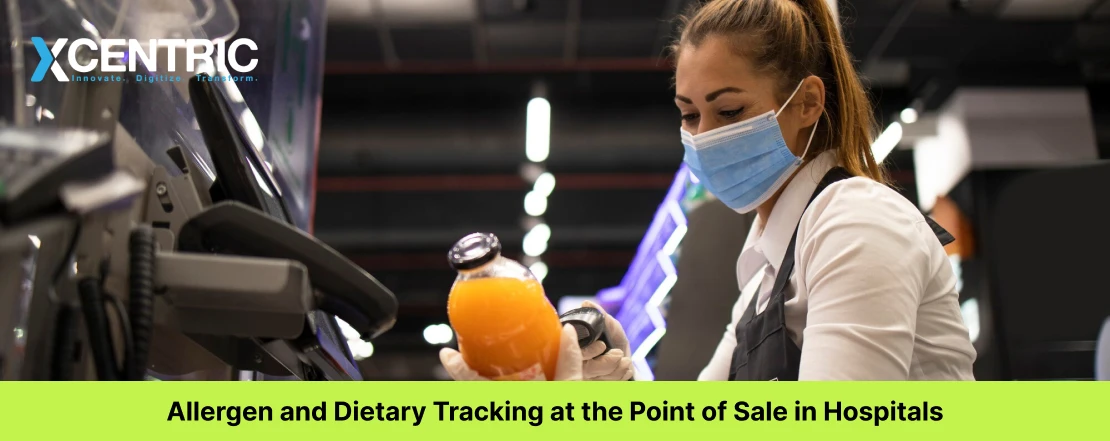
Allergen control is critical in patient care and staff food preparation areas. A comprehensive hospital food service management system should give visibility of the allergens, ingredients, and nutritional information in the meal ordering process. Administrators can set up menu filtering on:
Food allergies
Medical restrictions
Religious dietary requirements
Therapeutic diets
Ingredient exclusions
Nutritional guidelines
These controls are useful for patient populations to help support clinical dietary compliance. They enhance transparency and dining experience for staff and visitors.
Xcentric Services creates customized dietary management workflows that enable hospitals to keep accurate nutritional information while simplifying menu administration.
Demand Forecasting in an Unpredictable Environment for Hospitals
The demand for meals in hospitals cannot be easily forecasted. Healthcare settings are unlike schools or corporate offices in that their admissions and discharge rates, as well as other traffic sources such as patients, visitors, staff, and emergency situations, are constantly changing. Cafeterias can have huge shifts in volume within hours.
In today's systems, this problem is overcome by predictive demand forecasting tools, which analyze operational data and determine consumption patterns.
Inputs may include:
Shift schedules
Historical meal volume
Seasonal demand
Department staffing levels
Patient census data
Visitor trends
These insights inform food service teams on how they should streamline their purchasing, staffing, and inventory planning.
One of the key goals for any healthcare organization looking to improve its efficiency is to minimize food waste without compromising meal access. Reporting and forecasting are key tools that transform your hospital's operational data into meaningful planning insights at Xcentric Services.
Build vs Buy for the Hospital Cafeteria Management Software
When assessing food service technology, one of the tough choices for healthcare organizations is whether to buy an off-the-shelf food service technology or invest in a customized solution. The commercial products can provide fast implementation and standard functionality.
Purchasing an Existing Platform
Advantages include:
Faster deployment
Established workflows
Vendor support
Lower upfront investment
However, hospitals often need integrations, reporting needs, clinical workflows, and security controls that generic platforms aren't able to provide well.
Purchasing an Existing Platform
With custom development, there is more flexibility.
Benefits may include:
EHR integration
Custom reporting
Unique dietary workflows
Specialized approval processes
Department-specific configurations
Single staff and patient management
Hybrid solutions can be the best of both worlds for large healthcare organizations that want to ensure they're highly functional while still offering customization options.
Xcentric Services collaborates with hospitals to determine the operational needs, evaluate current systems, and create solutions that meet health care workflows, compliance standards, and organizational goals
FAQ (Frequently Asked Questions) About Hospital Cafeteria Management Software
What's the difference between the hospital cafeteria system and the patient meal management system?
A hospital cafeteria system can handle the staff/visitors' meal operations, and a patient meal management system can assist with clinical dietetic workflow, meal delivery, as well as nutrition-related care processes.
Does a hospital cafeteria management system need to be HIPAA compliant?
If the system is only used for staff and visitors for the cafeteria, HIPAA may not apply. When patient diet information is recorded and/or handled, HIPAA requirements come into play.
What are the system's accommodations for patients with medical conditions with regards to diet?
Orders for meals can be placed from clinical workflows and added to the system for meal planning and delivery purposes with meal restrictions, allergen control, and nutrition guidelines.
Is it capable of handling meal credits for staff with rotating shifts?
Yes. Most systems will allow for meal credits to be assigned to the employee by shift, employee group, department, or specified benefit group.
Does it support multiple hospitals from one hospital system?
Yes. Centralized administration and reporting enable healthcare entities to run several centers from a single platform.
Is the software interoperable with the Electronic Health Record (EHR) system?
Yes. Healthcare providers often use meal management software to streamline dietary orders and patient meal processes within their EHR systems.
What role is played by the tracking of allergens in the system?
The platform has the ability to store allergen information, show alerts, filter orders, and provide dietary protection when preparing and ordering meals.
Why opt for Xcentric Services Hospital Canteen Software?
Xcentric Services creates meal management solutions designed for the healthcare industry and integrates all aspects of the cafeteria, patient nutrition workflow, system integrations, reporting, security controls, and compliance issues into a single platform that meets the specific needs of hospitals and healthcare networks.
Share



Want To Increase Your Ranking On The Search Engines?
Get In Touch With Us!
Trending Blogs
Digital Marketing...
Xcentric Team
6 MONTHS AGO

What To Read Next?
For owners and managers of dental clinics in Lahore, here is a critical fact you...
Xcentric Team
6 MONTHS AGO

The Middle East e-commerce industry is rapidly growing due to increased digital acceptance, mobile-first consumers...
Xcentric Team
7 MONTHS AGO

These days, the e-commerce industry is growing at an exponential rate. With the rise of...
Xcentric Team
7 MONTHS AGO